S. Brent Rodriguez Plate

S. Brent Rodriguez Plate, is a writer, public speaker, editor, and part-time college professor whose books include A History of Religion in 5 1/2 Objects, Blasphemy: Art that Offends, and Religion and Film: Cinema and the Re-Creation of the World. His essays have been published in the Los Angeles Review of Books, The Christian Century, The Islamic Monthly, Huffington Post, Killing the Buddha, and elsewhere. He is a board member of the Interfaith Coalition of Greater Utica, NY, President of the Association for Religion and Intellectual Life/CrossCurrents, and managing editor of Material Religion: The Journal of Objects, Art, and Belief. He holds a visiting appointment at Hamilton College, NY. Twitter: @splate1


Articles

Religion Dispatches
The film is disingenuous—or rather the marketing for it is—as it suggests that we make a choice between nature and grace. One reviewer suggests that it’s about the middle way, about the redemption of siblings.
Article
Religion Dispatches
The top films for 2010—especially those up for this Sunday’s awards—leave most of the species-specific questions behind. Instead this year’s crop reflects anxieties (as well as promises) about who we are and who we might be becoming in and as humans, in our own skins—never mind the “prawns” or “Na’vi.” Questions provoked by this year’s films include those concerning the nature of our selves in connection and collision with our families, our larger social institutional entanglements, and our own bodies. The other key theme, effecting each of the others, had to do with the ways new media technology is inserting itself into our intimate lives, and changing our identities, both public and private.
Article
Religion Dispatches
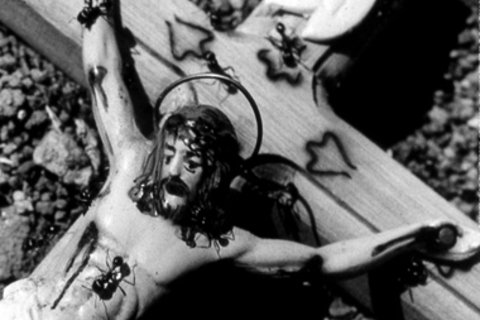
It doesn’t take much to realize the main theme of A Fire in my Belly is death. More specifically, it is the vulnerability, penetrability, and perpetually possible disintegration of the human body. This fleshly mortality became especially real to Wojnarowicz in the still emerging AIDS crisis of the time. Thus, by necessity it is a deeply human and deeply religious artwork. Which does not mean these images are pleasant and easy to look at. No warm and fuzzy pop spirituality this.
Article