Religion Dispatches
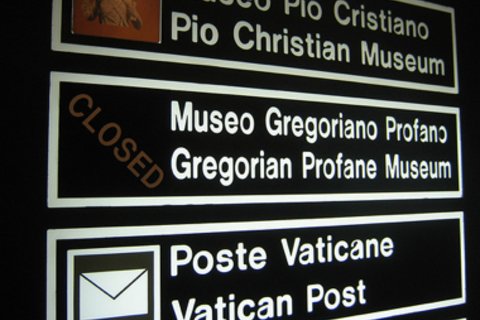
When the last non-Italian pope until John Paul II, a Dutch pope (Adrian VI), came to Rome for the first time. The cardinals proudly gave him a tour of the Belvedere. He was shocked and outraged, informing them (in Latin no less) that “these are nothing but pagan idols!” He threatened to sell off the whole collection, and in the interim built cabinets for them, locked the doors, and kept the key to himself.
Article
Religion Dispatches
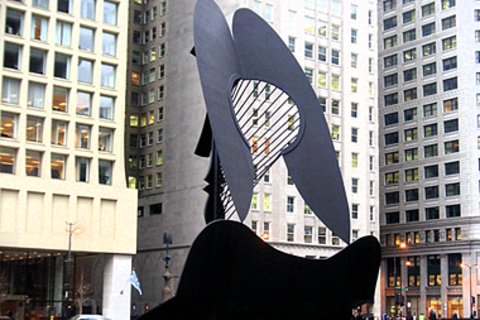
What does this mysterious sculpture depict? Popular answers include: an aardvark, a bird, an Afghan hound, and one of Picasso’s lovers. But to my eyes, it looks like a sphinx—a monster that (like the anamorphic skull haunting Hans Holbein’s famous painting The Ambassadors) only snaps into focus when viewed from an oblique perspective. To perceive the recumbent sphinx you have to approach the piece not from the front but from behind and to the side.
Article
Religion Dispatches
But 9/11 has changed the kind of art we’re interested in.
Article
Religion Dispatches
Finding closure beyond revenge.
Article
Religion Dispatches
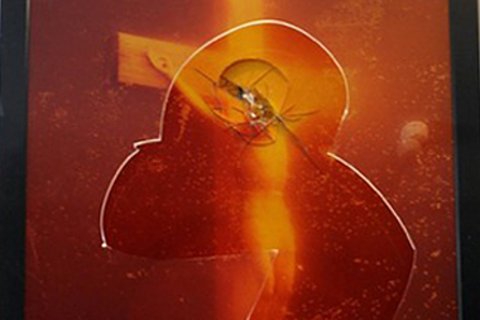
It’s Easter weekend, and French vandals armed with hammers have given further reason for contemplating the crucifixion, or at least its representation.
Article
Religion Dispatches
RD thinks the 73% of Americans who celebrate a Jesus-less Christmas are just fine.
Article
Religion Dispatches
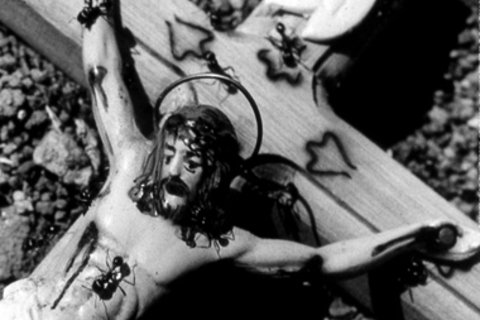
It doesn’t take much to realize the main theme of A Fire in my Belly is death. More specifically, it is the vulnerability, penetrability, and perpetually possible disintegration of the human body. This fleshly mortality became especially real to Wojnarowicz in the still emerging AIDS crisis of the time. Thus, by necessity it is a deeply human and deeply religious artwork. Which does not mean these images are pleasant and easy to look at. No warm and fuzzy pop spirituality this.
Article
Religion Dispatches
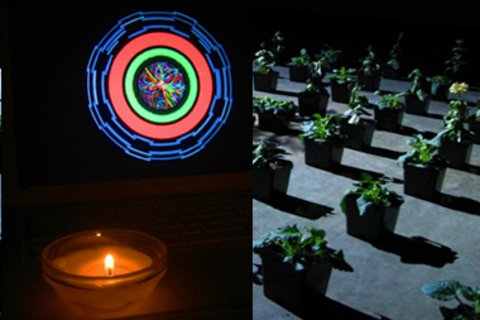
Artist Jonathon Keats feels there is a complete lack of curiosity on the part of the average person to ask the playful and profound questions at the heart of human existence. The hoi polloi wait, Keats laments, for the artist to tell us the meaning of their art, the scientist to tell us how the world works, and the religious leader to tell us right from wrong. We have become passive creatures. To help combat this lethargy, Keats has turned to pornography. It began a couple of years ago with plants—showing zinnias uncensored footage of explicit pollination acts—but now it has escalated to porn for God.
Article
Religion Dispatches
Duke Chaplain Abdullah Antepli and RD blogger and Associate Editor Hussein Rashid in dialogue.
Article
Article