There’s much to say about this week’s arguments, including the question of whether the employers were arguing, in effect, that it is acceptable to discriminate against LGBTQ people so long as they discriminate against all LGBTQ people.
The task of determining which web content students can access is outsourced to an Austin, Texas-based company called Lightspeed Systems, which had manually tagged The Satanic Temple’s website as “mature.”
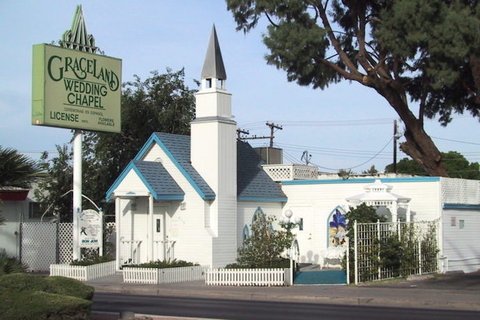
After the owner of a wedding hall was caught on tape refusing an interracial couple “because of our Christian race,” questions are resurfacing about the possibility that anti-LGBTQ “religious exemptions” might be paving the way for legalized racial discrimination.
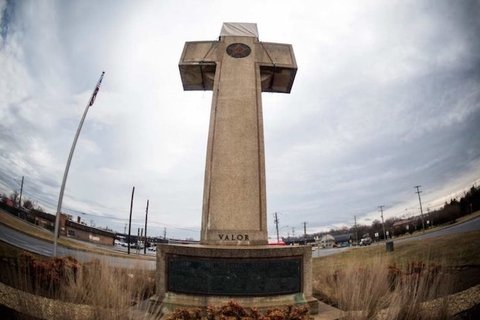
Alito’s majority opinion is bereft of both principle and reason. He could have been more concise and lost little nuance by simply writing: ‘The 40ft tall Christian cross is really old and people will get upset if we remove it, so it stays.’
While the “religious freedom” industry is busy protecting discriminatory bakeries and pharmacists who refuse to do their job, a humanitarian faces a hefty prison sentence for providing food and water to migrants in the desert.
While some have argued that opposition to a woman’s right to make decisions about her body is a legitimate religious freedom issue, this is a fundamental misunderstanding of the religious freedom issue at stake in the abortion debate.
Many have argued that Trump is little more than a “scam artist” who has duped evangelicals into following him. But it’s the other way around: Trump didn’t use the religious right to win the presidency; the religious right used Trump to get what it wanted.
Advocates of school yoga and mindfulness are no doubt sincere when they speak of these practices as secular resources that are desperately needed by a troubled education system, but there are compelling reasons to be skeptical.
While TST is not the first Satanic organization to obtain this status, it is the first group that clearly intends to deploy this status in legal challenges. TST’s demands for equal treatment under the law are going to be much harder to dismiss from here on out.
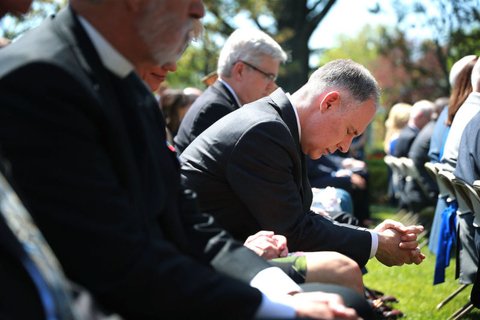
In 2010 the district court correctly decided that the National Day of Prayer violated the First Amendment: “Its sole purpose is to encourage all citizens to engage in prayer, an inherently religious exercise that serves no secular function.” On appeal, the Seventh U.S. Circuit Court of Appeals did not disagree—it couldn’t—but it tossed the case.