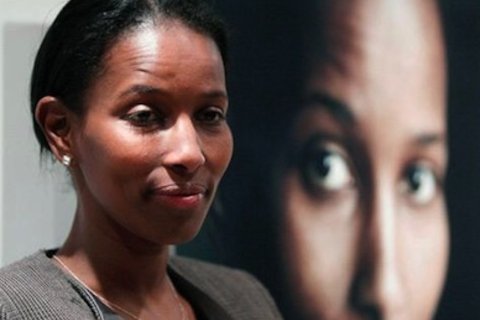
The outspoken ex-Muslim author has taken some liberties with the truth to cobble together a story that paints Islam as a religion of extremism and violence.
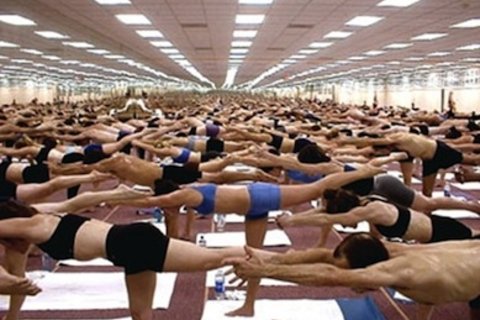
By now, it should be clear that William Broad’s broadside against yoga (sorry about that) in the New York Times is thin on facts and thick on rhetoric. Excerpted from his forthcoming book, the article, “How Yoga Can Wreck Your Body,” is a full-on, un-fair-and-balanced…
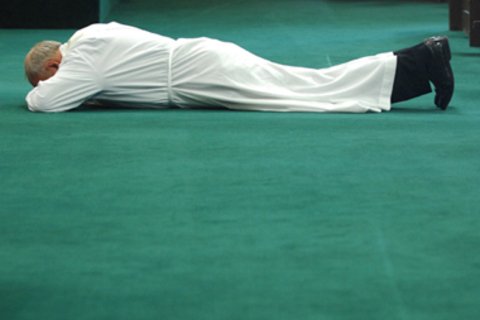
The creation of the Ordinariate is about sex, and resoundingly so. It affirms, not questions or challenges, the Catholic teaching on priestly celibacy and procreative marital sexuality.
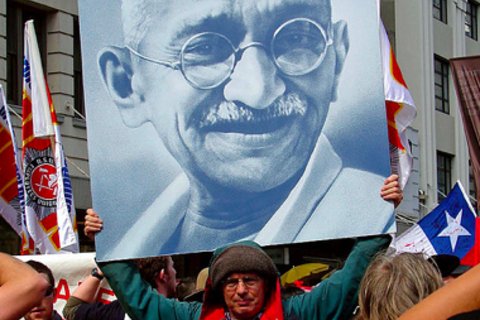
The Times managed to find a Gandhi scholar who would argue that the greatest hero of radical resistance would endorse the critics of Occupy Wall Street.
Mark D. Jordan’s recent RD op-ed garnered a response from Peter Steinfels, whose final New York Times column was referenced in the article. Here are both Steinfels’ letter, and Jordan’s response.
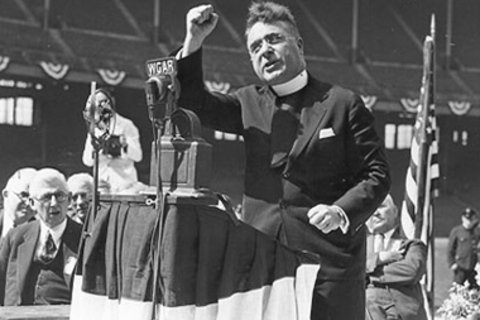
While the money for the Tea Party may have originated in the conservative revival of the ’70s, when it comes to ideology and language, it stretches back much further, to FDR’s New Deal, when coalitions of businessmen and religious leaders began their fight against ‘socialism.’
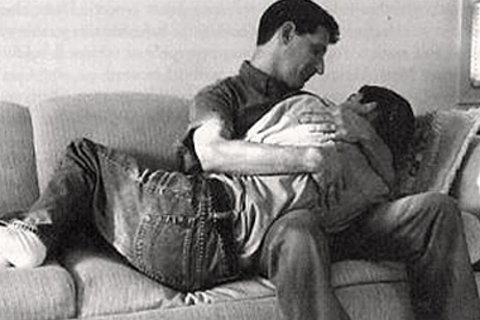
What counts as change in the ex-gay context often looks quite different from what cultural outsiders might expect. A recent NPR story left out the fact that Wyler was married and had children at the time of his conversion therapy, not a single gay man living in L.A. making a rational decision between gay life and religious and family life, as the story depicted. It is not surprising that a fourteen-year marriage would be a strong pull toward resolving an identity clash in favor of existing commitments—especially when those commitments are seen as reflections of God’s will.
“We believed that our listeners are well informed about (lesbian, gay, bisexual and transgender) issues and thus would not need to have this spelled out…”