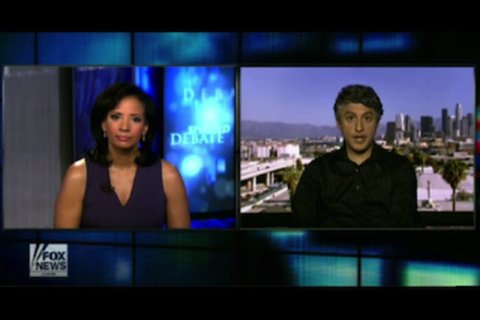
When FoxNews.com’s Lauren Green repeatedly pressed Reza Aslan, a Muslim, on why he wrote a book on Jesus, she was, without knowing it, putting the role of religious studies scholarship on a grand stage.
What would Supreme Court Justice Tom Clark think of public school Bible courses that taught that Jewish festivals are actually typological predictions of Jesus, that the “African races” are descendants of Noah’s cursed son Ham, that biblical stories about angels may have referred to extraterrestrial visitors, or that Genesis’ six-day creation story is scientifically accurate if interpreted correctly?
It’s simpler to assume that religion and feminism are at odds; that religion is simply the provenance of those who use tools like pro-life politics to fight feminist agendas. It’s much more complicated to think of religion as both resource and adversary in the political struggles that feminists face.
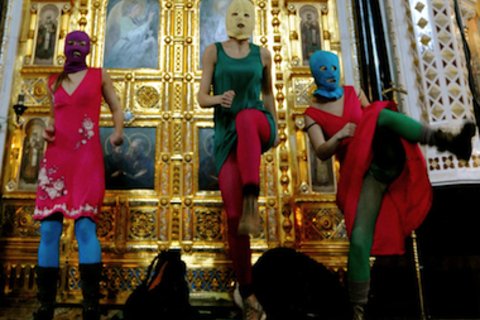
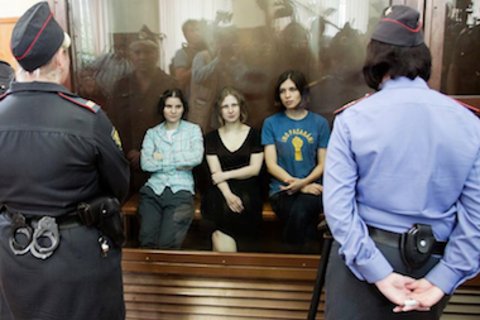
Much of the Pussy Riot trial has focused on the shifting role of the Church from the Soviet era, but what’s less well known is the Church’s efforts to mute dissenters outside of Russia.
Today, it can be argued, a different type of prophetic witness is emerging that is perhaps as radical and countercultural as those of the 1960s, given the current polarized climate. It asks people to consider how to be good global citizens amid pluralism—a pluralism that includes fundamentalists and atheists.