popular culture

Religion Dispatches
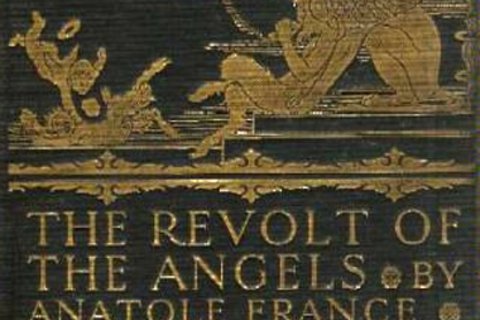
It’s been over a decade since the final installment of Philip Pullman’s subversive fantasy trilogy was published, with no new work in sight. So what are devotees of Oxford’s Rebel Angel to do? Well, they could do worse than to remember an old hand at religious satire: Anatole France. While my local big-box bookstore doesn’t carry a single one of his titles, this Nobel Prize winner (for literature, 1921) is among the world’s greatest satirists. He is also the writer of a clever piece of speculative fiction, Revolt of the Angels (1914), that comes across a bit like Pullman—drunk on sacramental wine.
Article
Religion Dispatches
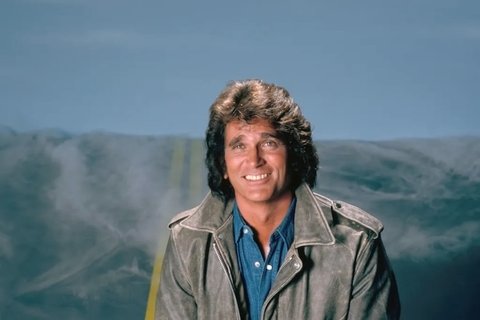
When Michael Landon died, many Christians thought they’d lost one of their own. Knowing that he was defined at least in part by language, when Landon finally told a Jewish story in a Little House episode, he used Yiddish as a marker of identity.
Article
Religion Dispatches
“What to the Slave Is the Fourth of July?” illumines the hypocrisy of a nation unable to check and challenge itself concerning its own moral hubris.
Article
Religion Dispatches
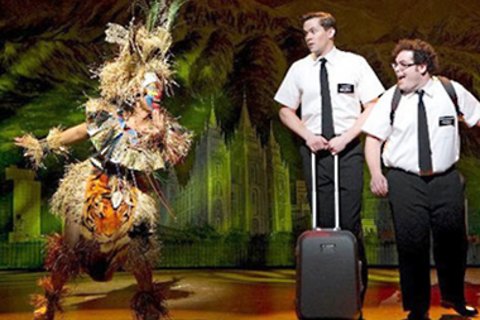
Ultimately it’s disappointing that Trey Parker and Matt Stone—two of the best satirists around—should have chosen such soft religious targets: missionaries from Utah. The finale to season 14 of South Park (the censured episode about the propriety of depicting Mohammed in a bear costume) was gutsier by far. By comparison, poking fun at clueless Mormon teenagers is a cop-out. It’s a waste of theatrical talent.
Article
Religion Dispatches
They take home nine Tony Awards.
Article
Religion Dispatches
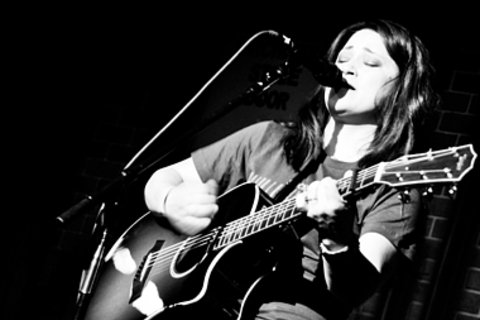
Knapp: I’m a relative newcomer to this public discourse. It’s nice when other artists say, “Listen, just doing your art is important.” I’ve had positive conversations with people in the Christian music industry as well. I have a long history with so many of them, and it’s been nice to reconnect. I’ve received a lot of encouragement from people who just really understand the importance of genuine relationships based on compassion and grace.
Article
Religion Dispatches
Structured around a family (mother, father, three children) which suffers a terrible loss, The Tree of Life is an extended midrash, or commentary, on the Book of Job, a verse of which forms the epigraph to the film and which is sermonized upon during an extended scene at a church. At once essentially Catholic and doggedly scientific in its worldview, its central family becomes an archetype, undergoing processes of childlike wonderment, Oedipal lust and rage, the loss of innocence, the loss of faith, and finally, it seems, redemption.
Article
Religion Dispatches
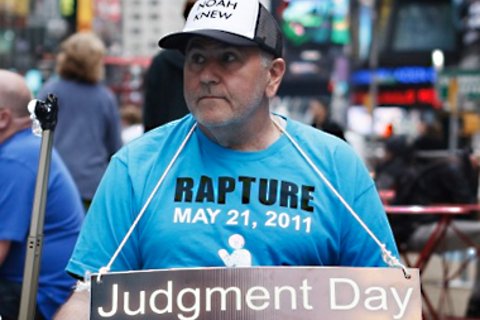
And so the world still turns. No rapture, no living hell, no Armageddon. We are where we were before the weekend with no signs of Christ’s return, facing the same ol’ same ol’: Arnold’s love child, Newt’s flame-out, life without Oprah. Perhaps this might be a nice teachable moment to reflect on all this—not nonsense at all, but rather an illuminating cultural moment that reveals an awful lot about the role of religion in our crazy world. What are the key takeaways from the “mediapocalypse”? Here are five for your consideration:
Article
Religion Dispatches
Attempts to legally define yoga would amount to identifying a bounded tradition of symbols, practices, and ideas, which in reality vary across yoga studios and ashrams within the United States alone.
Article
Religion Dispatches
The issue is not Christian conservatives advocating their views in the public square. The problem, rather, is their claim (at least in places such as The Daily Show or the New York Times) that their Providentialist beliefs and readings of documents from the past represent a kind of legitimate scholarship that should have its place in the public “debate.”
Article