secularism

Religion Dispatches
For the poet Javier Sicilia, a grieving father whose son was murdered by thugs last year, the pope’s visit is historic as well. Yet for him, and for those wounded voices he seeks to amplify, the pontiff’s arrival has less to do with pushing back secularism than with long-overdue attention to the ravages of Mexico’s drug wars.
Article
Religion Dispatches
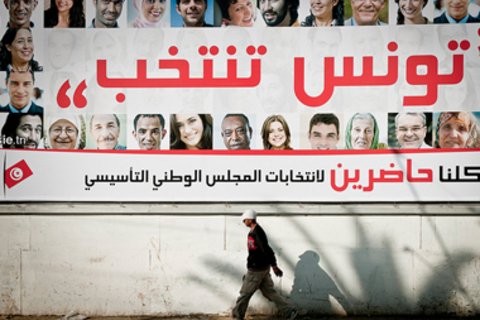
If we read the Arab Spring as a zero-sum game between Islamists and secularists, we’re going to miss what’s happening; if we imagine Arab democracy will look like secular Western democracy, we will likely be disappointed. And if we assume reference to Islam and democracy reveals only hypocrisy, insincerity, or ideological confusion, we’re likely to be surprised.
Article
Religion Dispatches
In the concluding volume of his trilogy on religion and secularism, the author argues that there is no chasm between religious belief and non-belief; certainly not in terms of politics and not even in personal terms.
Article
Religion Dispatches
Obama gets question from atheist at townhall meeting.
Article
Religion Dispatches
GOP presidential candidates differ.
Article
Religion Dispatches
Something is clearly up (or down) with religious affiliation, but reading that data calls for the art for interpretation, not mathematical modeling. That’s what makes this story far more interesting—and far less funny.
Article
Religion Dispatches
The assumption that Arab states that aren’t democratic are oppressive Islamist states lazily equates the public practice of Islam with all things undemocratic.
Article
Religion Dispatches
How did we get to the point where the infringement of a religious obligation is constitutionally irrelevant despite the existence in the text of a constitutional protection of religion?
Article
Religion Dispatches
The religious right is framing the repeal of Don’t Ask, Don’t Tell as an infringement of Christians’ religious freedom, and is vowing to “protect” its chaplains.
Article
Religion Dispatches
How can a secular state justify its desire to discriminate between married persons and single persons? What compelling state interest is served by creating such social groups? I suspect that when this debate has made its way through the courts, a new issue will have emerged: that the state has no business in the marriage business, period.
Article