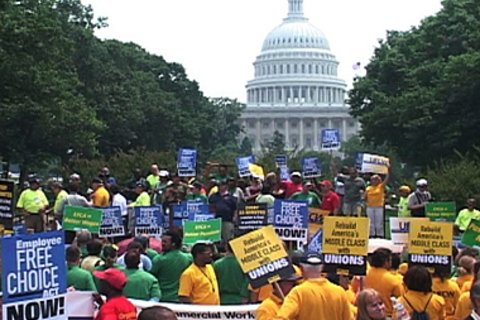
The Employee Free Choice Act will go a long way toward expanding workplace democracy. Progressive religious leaders, whatever their disagreements might be, must come together to support the restoring of dignity to those who labor honestly.
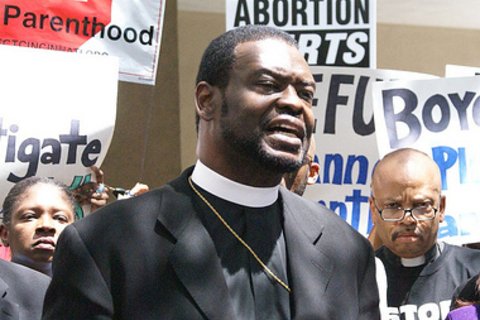
Bishop Harry Jackson, the African American head of the High Impact Leadership Coalition, has raised his profile by joining with top-shelf Religious Right groups in opposing gay rights and the inclusion of gays in hate crimes legislation.
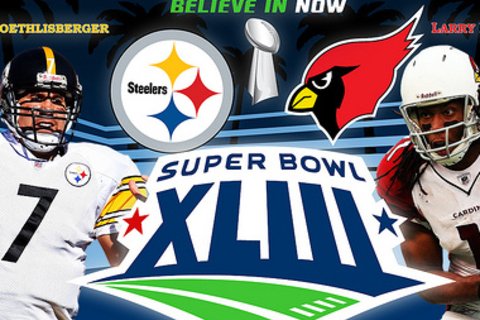
Indignant responses to the Janet Jackson nipple slip and the somber post-9/11 halftime show reveal glimpses of the sanctity of this yearly ritual, but it’s also in the creation of icons, the reinforcement of rules, and Americans telling themselves stories about themselves.
There’s something about American evangelical life that tends toward the production of these sex sagas and tonight’s HBO documentary on Haggard airs just as new dimensions of the sex scandal emerge.
The differences among religious folk in this country—once these issues make their way into politics—manifest in real divisions of money and power and security. To think that these conflicts can be resolved with mild-mannered compromises between Third Way and centrist evangelicals underestimates their importance.
Beneath the violence and inability to find peace in Israel/Palestine lie a series of narratives and myths American and Israeli Jews employ to understand the situation. One such narrative has shifted toward hope recently, but does it go deep enough?
We picketed bishops and Popes, stole their dresses, stood up at the consecration of the Eucharist and said the words out loud. We are the bad girls of Catholic feminism, and we have stood up, over and over again, for women’s freedom.
Christians should neither excoriate Israel nor remain silent in the face of horrendous attacks in Gaza and elsewhere. Rather, according to Rev. Laarman, American Christians must heed King and make the issue about US policy and the kind of nation we aspire to be.
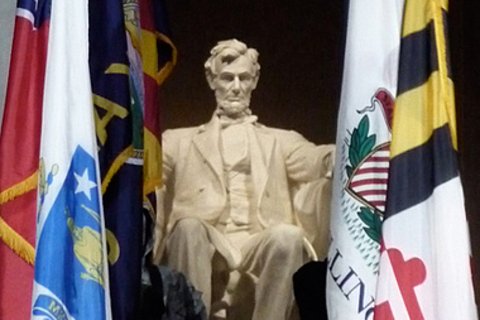
Drawing connections between history’s heroes and today’s leaders is one way to tell a political story. But invocations of Obama as Lincoln, as MLK, or as FDR are double-edged.