The Republican Party has maintained a death-grip on protestations of moral authority on matters of sexuality for most of my adult voting life. Since the Reagan administration we have seen a party that…
What led Mohamed Lahouaiej Bouhlel to rent a refrigerated truck, arm himself with a few pistols and fake assault rifles, and begin his terrible rampage last week on the beachside promenade of Nice…
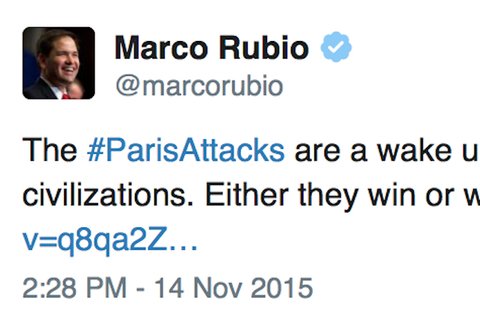
After Friday’s horrific attacks on Paris, France, leaving 129 dead, hundreds wounded, a nation traumatized, and a world shocked, we are of course asking: What do we do now? But, of course, we’ve been…
The unique spectacle that is the presidential election season entered a whole new realm of fantasy last week with the dissemination of “A Different Kind of Republican Leader,” the official Rand Paul…
The U.S. Catholic Bishops’ vote to maintain their politically aggressive Ad Hoc Committee on Religious Liberty for another three years signals that despite the warnings of Pope Francis to tone down…
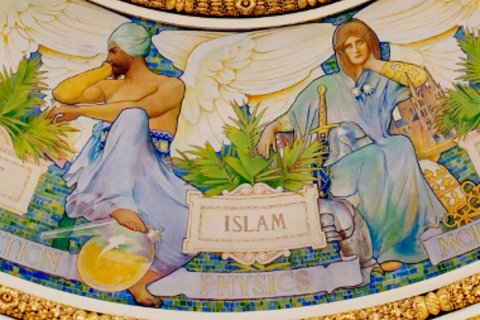
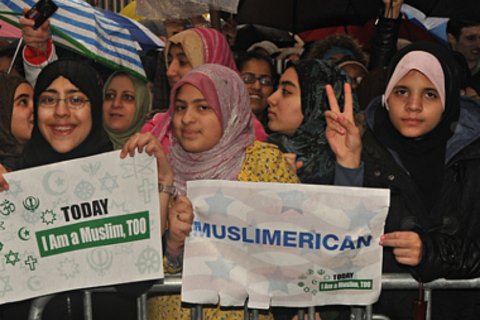
When we read of Enlightenment efforts to rehabilitate the image of Islam alongside the fact that outgoing Rep. Michele Bachmann raised more than $1 million in 25 days from a Muslim-themed witch hunt, it’s easy to ask how such openness could curdle into such paranoia. But that would be too simple.
Across South Carolina—and indeed the country—voters attend tiny churches, Bible studies, and prayer meetings. Their collective views on the candidates are much more difficult to measure and assess. And while they may be consumers of Christian talk radio, or televangelism, or other religious media, they are not lock-step followers of the decisions of elites who met at a ranch in Texas, or of Jim Bob Duggar, or of anything but their own received revelation.
I’m not arguing that Islamophobia is racist, or that Islamophobes are racists, because that’s not quite what’s happening. For one thing, Islamophobes embrace ex-Muslims like Ayaan Hirsi Ali, and racists wouldn’t (indeed couldn’t) do the same. But consider the similarities: the Islamophobe must assume Muslims suffer some sort of pre-Islamic inferiority, sufficient to explain how some (largely non-white) people—actually, a lot of people—not only fell for Islam in the first place, but then stayed down. How long do enforced ideologies last? Nazism: twelve years. Communism: some decades. Islam: Fourteen centuries and counting.