Today the U.S. Supreme Court gutted our system of civil rights laws that have done so much to advance America’s aspirational promise of equality. Worse, the court eviscerated equality in a case it…
On Tuesday, the Supreme Court heard oral arguments in 303 Creative v. Elenis , the latest case to pit the Christian Right against LGBTQ people. Or is it? “Supreme Court Will Hear Latest Clash Between…
“How do we get people to view the CCCU as an extremist organization, the same way they view ADF?” It’s a great question that Paul Southwick, a gay attorney and the director of the Religious Exemption…
America is trapped in an abusive relationship—not just with the pussy-grabbing President Donald Trump, our abuser-in-chief, but also with the Republican Party, its white Christian base, the police…
There’s much to say about this week’s arguments, including the question of whether the employers were arguing, in effect, that it is acceptable to discriminate against LGBTQ people so long as they discriminate against all LGBTQ people.
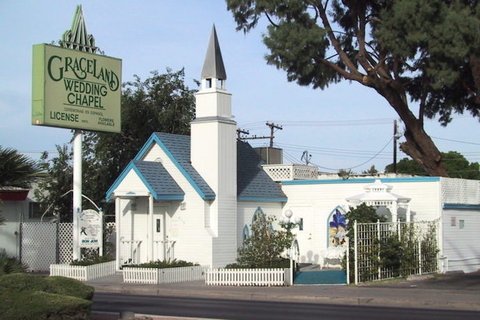
After the owner of a wedding hall was caught on tape refusing an interracial couple “because of our Christian race,” questions are resurfacing about the possibility that anti-LGBTQ “religious exemptions” might be paving the way for legalized racial discrimination.
In the rare instances when courts roll back Christian privilege, the cries of persecution are swift. But parity is not oppression. And the erosion of unwarranted privilege is not persecution; it is the steady march toward equality.
While the issues are piling up, the Supreme Court—and U.S. society more broadly—will have to face the questions ducked in Masterpiece Cakeshop, or else be willing to settle for a level of uncertainty that serves no one.
The Court may not have explicitly rejected Phillips’s free speech claims, but the fact that seven of nine justices chose not to follow Phillips and his attorneys in their primary reasoning, even while ruling in their favor, is noteworthy.