science and religion

Religion Dispatches
So to see Manhattan itself go belly-up after the storm, to watch how carnal we become when met with loss of power, has been a sobering and a saddening experience. All of this has made me think more squarely about how inured we have become to screens as the mediator of our imaginative lives. Without electricity, we have no escape. Without Playstations and Xboxes, we have no other-worlds. Without fully charged mobile devices, we have no social media. Without our screens, we have lost our spaces of order, our promised places of reliable rules, our escape from reality. Whereas some New Yorkers contented themselves with flashlights and novels during Sandy’s aftermath, others felt compelled to trudge up to the gaudy power-lit mega-screens of Times Square, where at least you could see commercials and fight for seats at Starbucks.
Article
Religion Dispatches
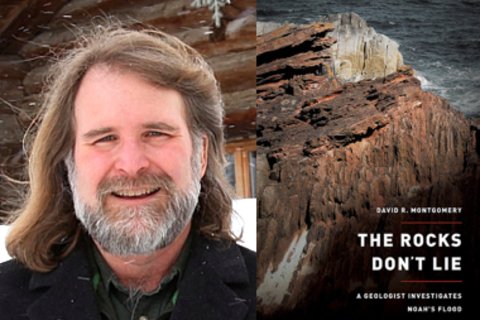
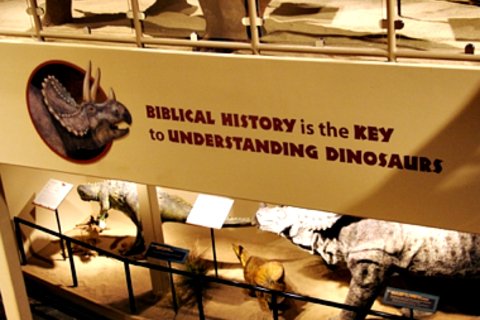
At the Creation Museum in Kentucky, a place that promotes the idea that all of these layers of rock got created at once through Noah’s Flood—and yet right under their feet is this beautifully vetted stretch of limestone, it’s really too finely laminated and too extensive to possibly be explained by something like that. So you look at these things and you have to ask, what do you make of the world? Can the world tell its own story?
Article
Religion Dispatches
How did Rick Santorum roll over Mitt Romney in all those primary states? Where did the energy come from? While pundits still insist that he won’t topple the moneyed Mitt—whose campaign still generates about as much excitement as the winter sport of curling—Santorum is holding onto the spotlight long enough to put religious populism front and center.
Article
Religion Dispatches
Depends on what you mean by magic.
Article
Article
Religion Dispatches
Futurist Ray Kurzweil blurs the lines between science, religion, and sci-fi.
Article
Religion Dispatches
If three wacky experiments and a host of assumptions makes it so.
Article