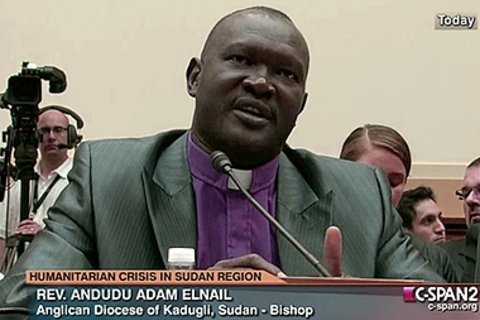
When evangelical activist Brad Phillips told senior members of the House Foreign Affairs Subcommittee on Africa about what he had seen and heard during a recent trip to South Kordofan, Sudan, they called an emergency hearing.
In 1970 Mark Hatfield delivered the commencement address at Fuller Theological Seminary, the nation’s premier neo-evangelical seminary. The senator, “a verbal spellbinder,” dark and “too handsome, almost, for his own good,” according to political observers, cut quite a figure.
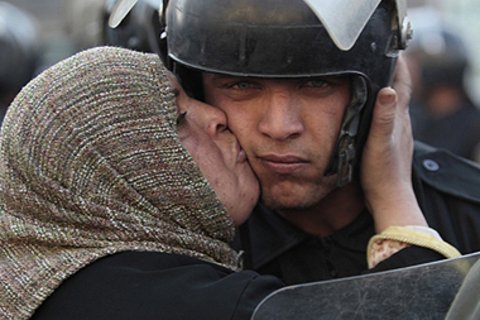
While many books will no doubt be written about the momentous events that are unfolding in the Middle East, many of them will doubtless leave out the prehistory. By exploring the rich tradition of nonviolent resistance in the Muslim world—from Palestine and Pakistan, to Kosovo and the Maldives—Amitabh Pal dispels the oft-repeated misconception that what we are witnessing in the Arab Spring is without precedent.
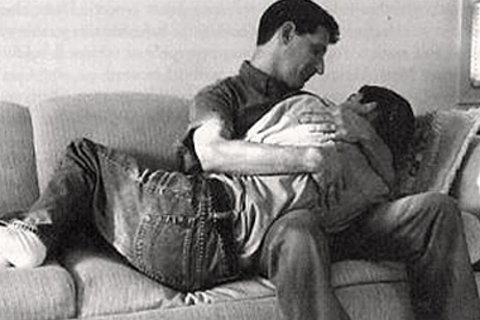
What counts as change in the ex-gay context often looks quite different from what cultural outsiders might expect. A recent NPR story left out the fact that Wyler was married and had children at the time of his conversion therapy, not a single gay man living in L.A. making a rational decision between gay life and religious and family life, as the story depicted. It is not surprising that a fourteen-year marriage would be a strong pull toward resolving an identity clash in favor of existing commitments—especially when those commitments are seen as reflections of God’s will.
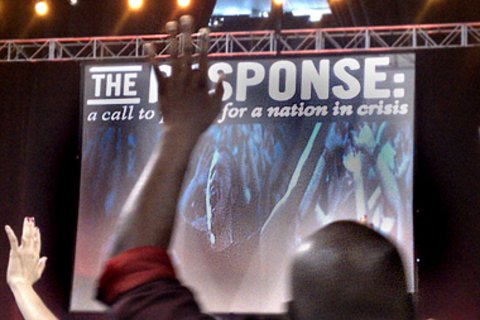
The people who gathered at Reliant Stadium are not just Rick Perry’s spiritual army, raised up, as Perry and others imagine it, in the spirit of Joel 2 to sound an alarm and prepare the people for Judgment Day. They are the ground troops the religious right set out four decades ago to create, and duplicate over generations, for the ongoing culture wars.
“We believed that our listeners are well informed about (lesbian, gay, bisexual and transgender) issues and thus would not need to have this spelled out…”