
In February 2025, one month into Trump’s second term, his administration’s Department of Homeland Security (DHS) launched a $200 million campaign of television, radio, and online ads addressed to non-citizens and citizens alike. Running internationally and domestically, the ads thrust viewers straight into Short for Make America Great Again, the slogan of Donald Trump’s 2016 presidential campaign. Learn more 2.0’s White nationalist drama and cast an expanded surveillance machine as the star of a crusade to ‘protect Americans’ against an immigrant flood.
“If you do not self-deport, we will hunt you down, arrest you, and deport you,” warned Secretary of Homeland Security Kristi Noem in the launch of a new series of campaign’ videos in April.[Footnote 1] “You will be fined nearly 1000 dollars a day, imprisoned and deported. You will never return,” she threatens in one video, which opens with a series of mugshots of Latino, Black, and Asian men flashing across the screen.[Footnote 2] However, Noem also reminds viewers that DHS’s newly intensified partnerships with tech companies has yielded a novel digital documentation option for “good” undocumented immigrants: “[I]f you register using our CBP [Customs and Border Protection] Home app and leave now, you could be allowed to return legally.”[Footnote 3] Those who “do what’s right”[Footnote 4] may still “have an opportunity to return and enjoy our freedom and live the American dream,”[Footnote 5] she states. For those who don’t, Noem promises, “[W]e will find you and we will deport you. You will never return.”[Footnote 6]
History reminds us that we’ve seen this dystopian theater play out before. The MAGA Right’s tech-driven expansion of U.S. surveillance infrastructures around an invented “immigrant invasion” demands that immigrants register and document themselves within it to prove their worth—and it draws from a bleak legacy of authoritarian conditioning in the U.S. that’s over a century old. My book, Predatory Data: Eugenics in Big Tech and Our Fight for an Independent Future, traces this history of A term used to describe organizations, movements, ideas, and policies that oppose immigrants and immigration. Learn more monitoring and disinformation in the U.S., to show how anti-immigrant campaigners repeatedly drew from eugenic models of race “science” to stoke fears over immigrants—and democracy itself—as threats to a strong “American” nation.
“Many of today’s racial profiling instruments were developed at the height of eugenics in the late 19th century to curb non-White immigration before being applied to other groups of people in the U.S.”
At the turn of the 20th Century, U.S. eugenicists inspired authoritarian leaders of the era by beginning a more than 50-year-long period of eroding democratic protections and rights by exploiting anxieties over immigration. This allowed eugenicists to advance varied policy gains in the U.S. They introduced monitoring and profiling techniques to identify and exclude “contaminating” immigrants, normalizing the use of these instruments before expanding their use to evaluate and contain other “dysgenic” groups who were deemed a “threat” to the nation.[Footnote 7] By the mid-20th century, these groups included far more than just immigrants. The Trump regime’s anti-immigrant strategy builds from this 19th century movement’s playbook, using its tactics to design a system for immigrant surveillance and containment that already appears to be expanding for wider political Repression occurs when public or private institutions—such as law enforcement agencies or vigilante groups—use arrest, physical coercion, or violence to subjugate a specific group. Learn more .
Profiling “Good Immigrants,” Monitoring “Criminals”
Decades before the rise of Nazi Germany, eugenic profiling and data collection in the U.S. enabled anti-immigrant campaigners to suspend democratic norms, erode democratic institutions and retract given rights for growing classes of immigrants and U.S.-born citizens alike—all in the name of stopping superior groups’ “race suicide”[Footnote 8] and protecting against the rise of “degrading” forces in the U.S. The data economy that underpins the U.S. immigration system began with these ideas and techniques.
Many of today’s racial profiling instruments were developed at the height of eugenics in the late 19th century to curb non-White immigration before being applied to other groups of people in the U.S. This included a national data collection system to monitor movement between (and later within) national borders; biometric databases and photographic ID requirements to identify “criminal types” through racializing assessments of what was visibly marked (or not) on bodies; intelligence and literacy tests to monitor for “feebleminded” immigrants; and eventually, the forced sterilization of “degrading” populations in more than 30 states, disproportionately impacting Black, Brown, Indigenous, and poor women.[Footnote 9] Even as the policies and technologies shifted over time, today’s immigration system developed out of these racist instruments created to supposedly distinguish “criminals” and “inferior” groups from those who were “good” and “deserving.”
“DHS’ new CBP Home app dramatizes the vast expansion of the MAGA Right’s monitoring capacities, now anchored around tech industry partnerships to make data profiling operate with more efficiency than ever before.”
The passage of the 1875 Page Act—also known as the first Chinese Exclusion Act— relied on eugenic arguments about “Chinese racial character” as inherently criminal and immoral, resulting in the first set of U.S. laws aimed at restricting immigration of a specific ethnic or national group.[Footnote 10] With it, the U.S. introduced the world’s first biometric, photographic ID system for tracking immigrants’ cross-continental movements.[Footnote 11] Developed before the general use of passports, the new verification system initially applied to Chinese women seeking U.S. entry, and required they submit photographic and written documentation to verify their moral fitness and prove they were not criminal prostitutes.
Much like DHS’ new CBP App does now over a century later, the Page Act required immigrants to register and prove themselves to be “good” immigrants (rather than criminals) by submitting themselves to enhanced scrutiny and evaluation. Chinese women were an easy first target for anti-immigrant campaigners—villainized in eugenic propaganda as prostitutes who were “the source of the most terrible pollution of the blood”[Footnote 12] and the ruin of respectable White families, they were blamed for an impossible 90 percent of venereal disease cases in cities like San Francisco.[Footnote 13] The law was also designed to exclude them—it barred entry to women from “any Oriental country” for presumed “immoral labor.”[Footnote 14] As a result, in practice the Page Act consistently denied Chinese women entry to the U.S., until the mid-20th century. Even when there was no basis to such eugenic profiling, these monitoring mechanisms reliably produced the data and “evidence” needed to justify groups’ exclusion and expulsion.
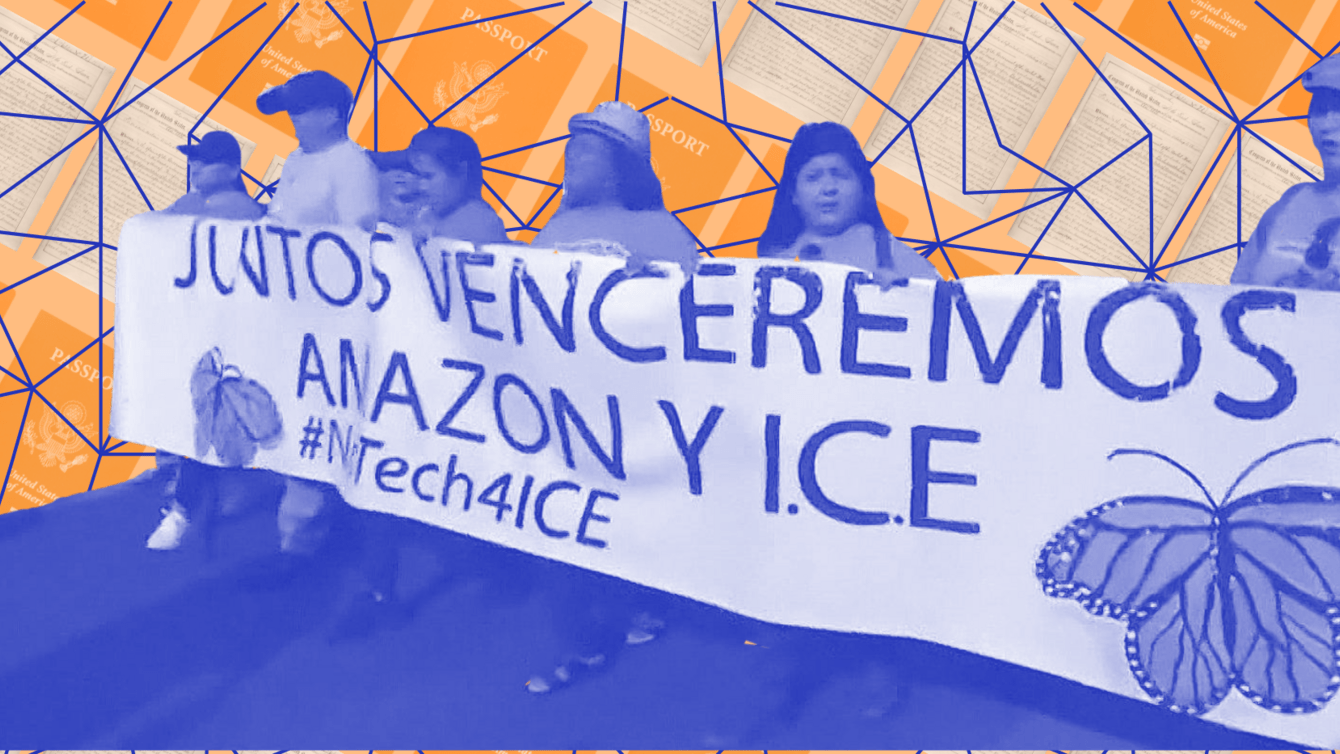
DHS’ new CBP Home app dramatizes the vast expansion of the MAGA Right’s monitoring capacities, now anchored around tech industry partnerships to make data profiling operate with more efficiency than ever before. The self-deportation app absurdly sells itself by offering migrants the “safe” option for deportation while saving U.S. taxpayer dollars and allowing valuable CBP resources to be focused on “the real,” violent criminals. It tells “good immigrants” to submit themselves to the state’s scrutiny, and tells them in the process, they can document themselves and their ability to make the right choices for America. Like the photoshopped images of Kilmar Abrego Garcia’s tattooed fist used by the MAGA Right to “prove” alleged gang membership, this claim operates on the preposterous premise that monitoring will uncover “real evidence” to distinguish “true” criminals. But the dystopian bargain underpins a dark process already underway to make deportation—as acting ICE Director Todd Lyons grimly put it—“like [Amazon] Prime, but with human beings.”[Footnote 15]
“Like eugenicists before them, the MAGA Right invents an ‘immigrant threat’ that requires heightened monitoring, creating new markets for xenophobic disinformation and profiling tools.”
Profiting From Xenophobic Profiling
Under the Trump administration, ICE’s expanded data collection purports to be more precise in evaluating immigrants and “streamlining selection and apprehension operations” for their so-called “deportation logistics.”[Footnote 16] Such a project claims to reveal a true “existential threat” to American lives. But like eugenicists before them, the MAGA Right invents an “immigrant threat” that requires heightened monitoring, creating new markets for xenophobic disinformation and profiling tools.
Past anti-immigrant campaigners profited from churning out eugenic disinformation. By the turn of the century, hundreds of U.S. universities[Footnote 17] were teaching eugenics, helping spur a “golden age of eugenics publishing”[Footnote 18] that spread eugenic conspiracy theories on the “alien invasion” and national “mongrelization.”[Footnote 19] Their ideas became so popular that famed eugenicist Madison Grant’s The Passing of the Great Race (1916)—which warned that immigrant dangers beyond the Chinese threatened to exterminate superior American classes—sold eight editions and multiple translations, creating a new market for U.S. publishers.[Footnote 20]
Anti-immigrant eugenicists also seeded an entire intelligence testing industry that was used to segregate “feebleminded” from “mentally fit” populations at the border, and later in schools, the military and other public institutions.[Footnote 21] The eugenicist Henry Goddard helped institute these tests as a requirement under the U.S.’s 1917 Immigration Act, after deploying biased psychological exams at Ellis Island that led him to conclude that over 80 percent of non-Nordic immigrants were “feebleminded.”[Footnote 22] Targeting Jewish, southern and eastern European, and Asian immigrants in particular, the biased data helped guarantee that the 1917 and 1924 US immigration acts introduced race-based quotas to increase White immigration from northern Europe, prevent non-Anglo entry,[Footnote 23] and exclude alcoholics, paupers, and political radicals as newly recognized national threats.
MAGA 2.0 is proving once again how intensifying immigrant surveillance can be an expedient for political and financial profit, with markets already surging for immigrant profiling and data on other “threat” classes. Indeed, Trump’s recent signing of the One Big Beautiful Bill Act supercharges his administration’s anti-immigrant agenda. While it made headlines for its unconscionable tax cuts for the ultra-wealthy while slashing Medicaid and SNAP, the bill included major budget increases for immigration and border enforcement. The $168 billion immigration appropriation is nearly five times the $34 billion in funding, and budgets $5.9 billion for “new technology” toward “cutting-edge border surveillance”[Footnote 24] —a single allocation that outstrips the 2025 funding for all other federal law enforcement agencies, including the FBI and IRS.[Footnote 25]
“Blaming democratic norms for triggering an expanded surveillance regime is a tactic from eugenics’ earliest days.”
This explosive spending supposedly allows the U.S. to reach a goal of deporting 1 million people per year and expand ICE detention capacity to an average daily population of 100,000. Many experts have questioned the feasibility of these numbers, reasoning they would be hard to achieve by targeting immigrants alone.[Footnote 26]
Even so, reports have already emerged about the Trump administration’s new contracts with Big Tech companies like Palantir and Amazon to intensify data collection for deportations. Palantir, the facial recognition company co-founded by tech billionaire and MAGA-funder Peter Thiel, received $113 million in federal government spending during Trump’s first four months in office,[Footnote 27] including a $30 million contract to build ICE a platform to combine sensitive data obtained by DOGE from agencies like the IRS, SSA, DHS, and USCIS.[Footnote 28] The ImmigrationOS database would integrate formerly discrete public records—including tax filings, social security numbers, and immigration status—into a centralized information system to create real-time profiles used to target individuals for detention and deportation. Following reports in May that the Trump administration was in conversation with Palantir for a parallel database to merge American citizens’ personal information across government agencies,[Footnote 29] the civil rights organization Mijente noted the tech sector’s pattern of experimenting on immigrants for surveillance tech with broader applications: “We have seen Palantir test its technology on immigrant and overpoliced communities over the years. Their next steps show that they are applying what they’ve learned towards the people at-large.”[Footnote 30]
Justifying Surveillance, Suspending Democracy
Against footage played of border-crossing migrants, DHS’s ad campaign accuses past “weak politicians” for creating a national immigration ‘crisis’[Footnote 31] that now requires extreme measures to correct. But blaming democratic norms for triggering an expanded surveillance regime is a tactic from eugenics’ earliest days. Francis Galton, a cousin to Charles Darwin and the English biostatistician who seeded eugenics to create a science for profiling talent and genius, pinned his 1865 argument around the assertion that individual character and traits (including alcoholism and laziness), were genetic, and explained higher poverty and crime in certain races. Decrying national welfare policies as artificially preserving inferior weak and poor lives, and “deteriorat[ing] the breed”[Footnote 32] Galton argued that elites like him should be empowered instead to enforce policies for population monitoring, data collection, and ultimately, social engineering. He enthused that if superior classes were empowered to exercise a program of surveillance and population control, “what a galaxy of genius might we not create!”[Footnote 33]
“DHS might tell us its operations distinguish ‘good immigrants’ from ‘real criminals,’ but history tells us this is a formula for authoritarian conditioning and an ever-expanding national surveillance machine.”
While eugenic disinformation allowed expansive gains in immigration bans at the turn of the century, it proved to be as powerful a tool for conditioning public tolerance for more overtly authoritarian containment measures. Withholding rights for immigrants as a special “threat” justified similar actions to contain other inferior, degrading forces. From 1907 to 1917, eugenic advocacy to legalize forced sterilization for “unfit” populations made rapid gains, with new laws to allow sterilization of convicted criminals, the mentally disabled, and the mentally ill in state custody passed in 15 states.[Footnote 34] California’s early passage of such a law allowed twenty thousand individuals to be sterilized between 1909 and 1979—largely working-class, Latinx, Indigenous, and Black women who were incarcerated or in state institutions for disabilities.[Footnote 35]
Today, the U.S. Far Right finds in immigration the ideal xenophobic catalyst and legal grey zone to enable A form of top-down political system that concentrates state power in the hands of a single leader and/or group of close allies. Learn more ’s rise. By uniquely allowing for “detention without trial, removal without a public hearing, and surveillance without probable cause,”[Footnote 36] as anthropologist James Greenberg has observed, a weaponized U.S. immigration system enables the MAGA Right to build a system designed for not only immigrant containment, but for expanded political repression and terror.
The history of anti-immigrant campaigning in the U.S. reminds us that the MAGA Right’s current campaign will not end with immigrants alone. Despite making familiar claims that it will focus on immigrant criminals for deportation, DHS’s dragnet has included resident workers, taxpaying neighbors, legal residents, international students, and legally-born citizens.[Footnote 37] Its containment efforts are also evident in sweeping arrests of lawful protestors in sanctuary cities, U.S. judges, and others who are treated as enemies of the state for challenging the regime.[Footnote 38] The inclusion of such individuals in DHS’s arrests and deportations shouldn’t be taken as an “error” in the system—it’s by design. MAGA’s anti-immigrant agenda hyper-accelerates state and for-profit surveillance operations without care for process or rights. New privately run ICE detention centers projected for California, Kansas, Michigan, Nevada, New Jersey, New Mexico, Texas and Washington thus are growing without being subject to state inspections or regulations.[Footnote 39]
Trump’s personal embrace of eugenic profiling is disturbingly evident. His repeated references to immigrants as carriers of “bad genes” and criminally predisposed are now accompanied by his administration’s graphic and dehumanizing depictions of immigrants profiled in arrest videos and mug shots—circulated in online campaigns and on social media—as “animals,” “stone cold killers,” the “worst people,” and the “enemy from within.”[Footnote 40]
Over a hundred years ago, it took a context like the U.S., where immigration patterns were quickly changing national demographics, to realize eugenic ambitions through national systems for surveillance. By projecting immigrants as a threat to a White U.S., eugenicists found a reliable means to stir-up public anxieties, sustaining enough popular support to pass violent population monitoring and control bills for half a century. We now have a chance to stop this cascade from happening again by calling out what this is. DHS might tell us its operations distinguish “good immigrants” from “real criminals,” but history tells us this is a formula for authoritarian conditioning and an ever-expanding national surveillance machine.